The Autocomplete Truth
UN Women2013
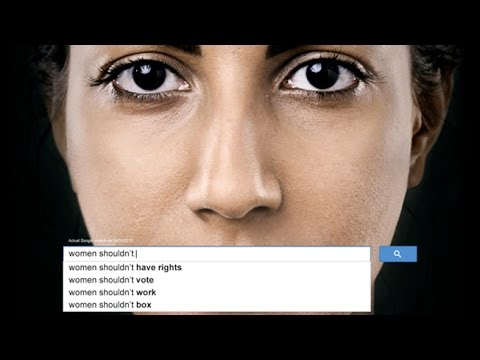
The Autocomplete Truth is a 2013 print and online poster series for UN Women, created by Memac Ogilvy & Mather, Dubai.
 Watch at the source
Why it works
Close-up portraits of women whose mouths are covered by a Google search box, filled with the search engine's own suggestions for phrases such as "women shouldn't", "women need to" and "women cannot". The completions were genuine, taken from searches on 9 March 2013. Memac Ogilvy & Mather Dubai's team said they were shocked by how negative the results were, and placed the text over each mouth as if to silence the woman behind it. It is studied as an early, brilliantly simple use of data as raw creative material: instead of asserting that sexism persists, it showed what the world's searches suggested people think. Released in October 2013, the ads were picked up widely and kept gathering momentum on social media into 2014, although critics pointed out that autocomplete results vary by user and country. At Cannes Lions 2014 it won the Middle East's first Titanium Lion, and Campaign Middle East counted three Gold Lions among its haul.
Techniques
- Visual metaphor A search box placed over each woman's mouth works like a gag, so a single image shows prejudice silencing women.
- Logos Genuine autocomplete suggestions serve as evidence, showing what searches reveal about attitudes to women instead of simply asserting that sexism persists.
Sources · 4
Updated