Guide
Ethos, pathos and logos in advertising
Ethos, pathos and logos are the three rhetorical appeals: persuasion through the speaker’s credibility, the audience’s emotions and the argument itself. Here is what each means, with real ads that use them and a checklist for spotting them.
Ethos, pathos and logos are the three means of persuasion that Aristotle set out in his Rhetoric in the fourth century BC, and they are still the standard way to describe how an advert tries to change your mind. His word for them was pisteis, usually translated as “means of persuasion”; today they are often called the rhetorical appeals. Aristotle expected a good speaker to use all three in the same speech, and most great adverts do the same.
Ethos is the appeal to character and credibility. Aristotle meant persuasion that comes from the speaker seeming trustworthy, which he broke into good sense, good moral character and goodwill towards the audience. In advertising, ethos comes from experts and authority figures, heritage, honesty about weaknesses, and brands whose behaviour proves their values. When Avis admitted it was only No. 2 in car hire, the admission made its promises believable.
Pathos is the appeal to emotion. Páthos meant experience or emotion, and Aristotle observed that people judge differently when they are pleased and friendly than when they are pained and hostile. In advertising, pathos is the warmth, joy, nostalgia, pride, fear or guilt an ad creates and attaches to the brand, as in Cadbury’s drumming gorilla, which sells a feeling and no product benefit at all.
Logos is the appeal to reason. Lógos meant speech, word or reason. Aristotle’s version covered arguing from examples and the enthymeme, a shortened argument whose missing step the audience fills in. In advertising, logos is facts, figures, tests, demonstrations and comparisons, like the padlock that survives a rifle shot in Master Lock’s 1974 Super Bowl ad.
A fourth Greek term, kairos, the opportune moment, is often added by writing teachers, because an argument that fits its time and place, like Oreo’s tweet during the 2013 Super Bowl blackout, persuades more than the same words would at another moment.
Each section below defines one appeal and shows three ads from the directory that use it, with a note on how. The full page for each appeal has every example and a longer guide.
Ethos
Ethos is the appeal to credibility: persuading people because of who is speaking, through expertise, authority, honesty, a long record or values the brand visibly lives by. These ads earn trust, each with a note on how.
-
 2012
L'Odyssée de Cartier
Parades heritage pieces and far-flung chapters of the house's history to display its breadth and pedigree to markets where its breadth was little known.
-
 2020
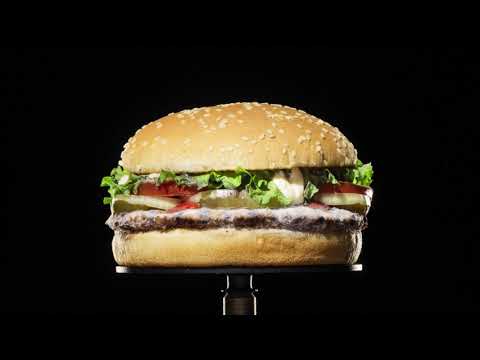
Moldy Whopper
By trading appetite appeal for visible honesty, the brand asks to be trusted precisely because it shows its product at its worst.
-
 2018
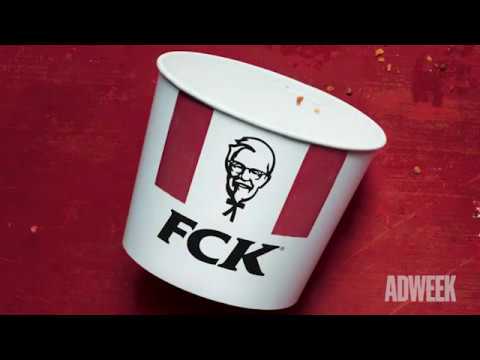
FCK ("We're Sorry")
A humble, plain-spoken apology instead of a lawyered non-apology rebuilds trust by owning the failure openly.
Pathos
Pathos is the appeal to emotion: persuading people by making them feel something, such as joy, warmth, pride, fear or guilt, and attaching that feeling to a brand or cause. These ads use it, each with a note on how.
-
 2020
You Can't Stop Us
Split-screen pairs of elite and everyday athletes merge into one body, stirring a feeling of togetherness that the narrated manifesto attaches to sport and Nike.
-
 2007
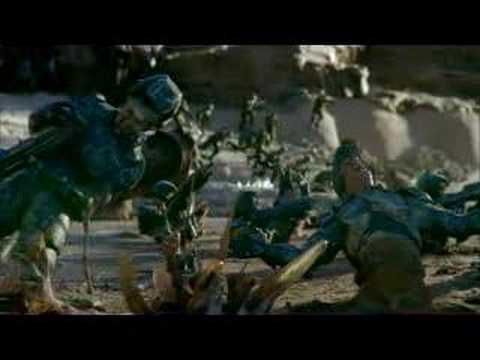
Believe ("Diorama")
A slow drift across exhausted soldiers on a frozen battlefield, set to Chopin, sells duty and sacrifice rather than gameplay or graphics.
-
 2007
Gorilla
Offers no product message at all, only the joy of a gorilla drumming, trusting viewers to carry that feeling over to the chocolate brand.
Logos
Logos is the appeal to reason: persuading people with facts, figures, tests, demonstrations and arguments they can follow and check. These ads make a case rather than a mood, each with a note on how.
-
 2006
Evolution
Compressing make-up, lighting and Photoshop stretching into 75 seconds shows exactly how a model's image is manufactured, letting viewers see the distortion for themselves.
-
 1958
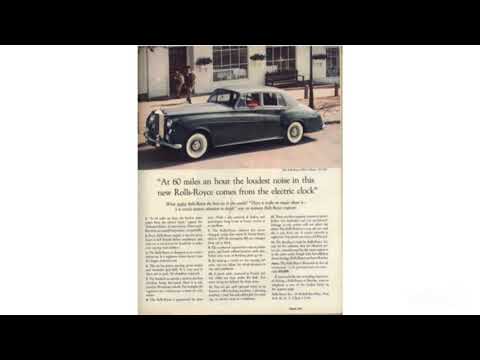
"At 60 miles an hour the loudest noise in this new Rolls-Royce comes from the electric clock"
A measurable detail about the clock being the loudest noise, backed by long copy full of engineering facts, proves quality rather than boasting about luxury.
-
 2016
Meet Graham
Turns an abstract truth, how little force the human body can absorb, into a physical figure people can walk around and study.
How to find the dominant appeal
Most ads use more than one appeal, so the useful question is which one carries the weight. Try taking each away in turn. Remove the music, faces and story: if nothing persuasive is left, the ad runs on pathos. Remove the facts and figures: if the case collapses, it runs on logos. Remove the speaker or the brand’s reputation: if the claim stops being believable, it runs on ethos. Then ask what the audience is meant to believe or do at the end, and which appeal gets them there.
Worked example: Dove, “Real Beauty Sketches” (2013)
In Real Beauty Sketches, a forensic artist who cannot see the women draws each of them twice: once from her own description of herself, and once from a stranger’s description of her. The women are then shown the two portraits side by side.
- Logos. The film is set up as an experiment, and its result is the evidence: the portraits drawn from strangers’ descriptions are kinder. Dove framed it around its finding that only 4% of women around the world consider themselves beautiful.
- Ethos. The method borrows the authority of forensic drawing, a technique trusted to picture a stranger from a description, so the comparison feels objective rather than staged.
- Pathos. The emotional weight lands when each woman sees the gap between how she describes herself and how others see her.
The dominant appeal is pathos. The experiment exists to produce that moment of recognition, and the end line, “You are more beautiful than you think”, names the feeling. But the logos is what makes the feeling credible: without the experiment the line would be a compliment, and with it the line becomes a finding. Guinness World Records recorded it as the most viewed online video advertisement, with almost 125 million views in 25 languages by November 2013.
Checklist
- Who is speaking, and why should I believe them? (ethos)
- What does the ad want me to feel, and how does it create that feeling? (pathos)
- What reason, fact or proof does it give? (logos)
- Why this moment and this place? (kairos)
- Which appeal would leave the biggest hole if it were removed?
- Does the evidence support the claim, or only seem to?
- Is the emotion fair to the facts?
- What is the audience meant to believe or do at the end?
Questions people ask
What are the rhetorical appeals?
The rhetorical appeals are the three means of persuasion Aristotle described in his Rhetoric: ethos, the credibility of the speaker; pathos, the emotions of the audience; and logos, the argument itself. Writing teachers often add kairos, the right moment, as a fourth.
What is kairos?
Kairos is the Greek word for the opportune moment, and in rhetoric it means fitting an argument to its time and setting. Oreo’s “You can still dunk in the dark” tweet, posted within minutes of the power cut at the 2013 Super Bowl, is a well-known advertising example.
What are examples of ethos, pathos and logos in advertising?
Avis’s “We Try Harder” (1963) uses ethos by admitting it is only No. 2; Cadbury’s “Gorilla” (2007) uses pathos, selling joy rather than chocolate; and Master Lock’s “Tough Under Fire” (1974) uses logos, showing a padlock survive a rifle shot.
Which appeal is most effective in advertising?
For building a brand over time, the evidence favours emotion: Les Binet and Peter Field’s analysis of IPA effectiveness data found that advertising became more effective the further it moved towards pure emotion, and that rational messages came out best only in short-term, direct-response work. Most successful ads still combine the appeals.
Can an ad use all three appeals?
Yes, and many of the best do. Dove’s “Real Beauty Sketches” (2013) uses an experiment as evidence (logos), forensic drawing as a credible method (ethos) and the women’s reactions for emotional force (pathos).
Who came up with ethos, pathos and logos?
Aristotle, the Greek philosopher, set out the three means of persuasion in his Rhetoric in the fourth century BC. Roman teachers of rhetoric such as Cicero and Quintilian later drew on his scheme.
How do you remember ethos, pathos and logos?
Ethos is about the speaker’s character (think ethics), pathos is about the audience’s feelings (think empathy and sympathy), and logos is about the argument (think logic).
Sources8
- Rhetoric, Book I (translated by W. Rhys Roberts)
- Rhetoric, Book II (translated by W. Rhys Roberts)
- Aristotle’s Rhetoric
- Classical Argument
- Pathos
- Logos
- This Much I Learned: Les Binet and Peter Field on 10 years of The Long and the Short of It
- Most viewed online video advertisement (Dove Real Beauty Sketches)
More guides
-
How to analyse an advert
To analyse an advert, establish its context and audience, describe what it shows and says, identify its message, appeals and techniques, then judge its effect with evidence. Here is a six-step method, worked through on Volkswagen’s “Think Small”.
7 min read
-
The 7 propaganda techniques, with examples from real ads
The seven propaganda techniques are name-calling, glittering generalities, transfer, testimonial, plain folks, card stacking and bandwagon, listed by the Institute for Propaganda Analysis in 1937. Here is each one, with real ads.
6 min read
-
What is a slogan? Examples, and what makes one work
A slogan is a short, memorable phrase that a brand, campaign or cause repeats to sum up what it stands for, such as Nike’s “Just Do It.” Here is how slogans differ from taglines and jingles, where the word comes from, and what the lasting ones share.
6 min read