Guide
The 7 propaganda techniques, with examples from real ads
The seven propaganda techniques are name-calling, glittering generalities, transfer, testimonial, plain folks, card stacking and bandwagon, listed by the Institute for Propaganda Analysis in 1937. Here is each one, with real ads.
Propaganda is a deliberate attempt to shape what people believe or do by spreading information chosen for effect: facts, arguments, rumours, half-truths or lies. What sets it apart from ordinary conversation, as Encyclopaedia Britannica puts it, is deliberateness and a heavy emphasis on manipulation. The word itself comes from the Catholic Church's congregatio de propaganda fide, a committee of cardinals "for propagation of the faith" founded in 1622.
The seven propaganda techniques come from the Institute for Propaganda Analysis (IPA), a small educational body set up in New York in 1937. It grew out of conversations between Clyde R. Miller, a journalist turned education professor at Columbia University's Teachers College, and the department-store owner Edward A. Filene, who paid for it. Filene wanted schools to teach people "how to think" rather than "what to think", and he was alarmed by how vulnerable Depression-era Americans seemed to extremist propaganda.
In November 1937, in the second issue of its bulletin, Propaganda Analysis, the IPA set out "seven common propaganda devices": name-calling, glittering generalities, transfer, testimonial, plain folks, card stacking and band wagon. "We are fooled by propaganda chiefly because we don't recognize it when we see it," it began. The devices worked, it said, because "they appeal to our emotions rather than to our reason". In 1939 its book The Fine Art of Propaganda applied all seven to the radio speeches of Father Charles Coughlin. Within a few years, by one estimate, a million American schoolchildren were learning the list.
The IPA suspended its work in 1942, soon after the United States entered the Second World War. Historians still argue about it: J. Michael Sproule notes that the seven categories overlap and that experiments found knowing them did not reliably stop people being persuaded, and A.J. Bauer argues that the Institute had political aims of its own. But the list survives in classrooms because it is easy to use.
It matters for reading ads because the IPA never confined it to politics. Its 1937 bulletin said the devices sway us "for" or "against" everything from "automobiles, cigarettes, radios, toothpastes" to "presidents, and wars", and its first example of a testimonial was a smoker vouching for Camel cigarettes. The devices are not proof of wrongdoing; a health campaign can use a testimonial honestly. Their value is a habit of mind: name the device, set it aside, and judge the idea on its merits.
Below, each of the seven techniques in the IPA's own order, with a short definition and ads from this directory that use it.
Name-calling
Name-calling is a propaganda technique that pins a bad label on a person, group or idea so that people reject it without looking at the evidence. The label can be a slur, a nickname, a loaded word or a monstrous picture.
-
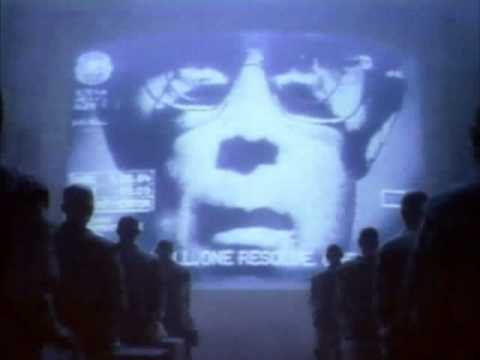 1984
1984
Never names IBM but casts its dominance as Orwell's Big Brother, a label that makes buying from the market leader look like submitting to it.
-
The next big thing is already here.Samsung Mobile (Galaxy S II)2011
The Next Big Thing Is Already Here
Casts the rival's most loyal buyers as hipster sheep, down to a barista who thinks he is too creative for a Samsung, so the iPhone becomes the phone of people who queue without thinking.
-
He's the biggest celebrity in the world. But is he ready to lead?John McCain presidential campaign2008
Celeb
Pins one word on Obama, “celebrity”, and cuts him in beside Britney Spears and Paris Hilton, so voters doubt his substance without weighing his record.
Glittering generalities
Glittering generalities are vague, feel-good words such as freedom, hope or perfection, used so that people approve of something without asking what it actually means or promises.
-
Absolut Perfection.Absolut Vodka1980
Absolut Perfection
Claiming perfection in a single word praises the vodka in lofty terms that promise nothing specific.
-
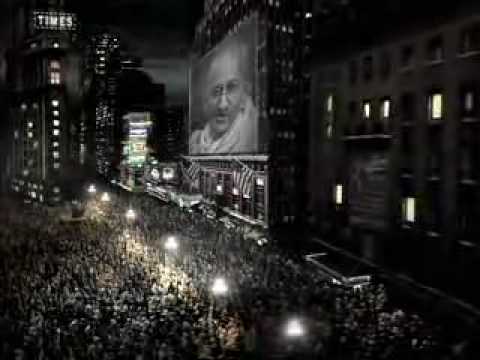 2004
Gandhi
Sells the lofty idea of connection, summed up as communication being life, rather than any specific service.
-
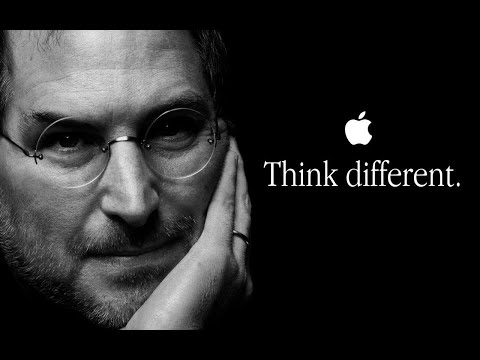 1997
Think Different ("The Crazy Ones")
A prose poem saluting misfits who change the world sells an ideal of thinking differently while promising nothing specific about any product.
Transfer
Transfer is a propaganda technique that links a product, person or cause to something people already respect, such as a flag, a religion, a hero or a work of art, so that the respect carries over. It also works in reverse.
-
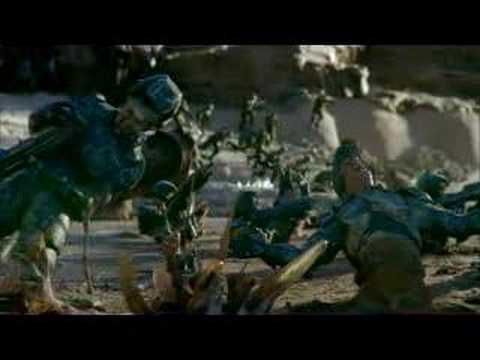 2007
Believe ("Diorama")
Treats a video-game hero the way societies commemorate real war heroes, borrowing the gravitas of museum memorials and war cinema for the game.
-
 2016
The Next Rembrandt
A long-time sponsor of Dutch art borrows the prestige of Rembrandt himself, using data from his known paintings to produce a new 3D-printed portrait.
-
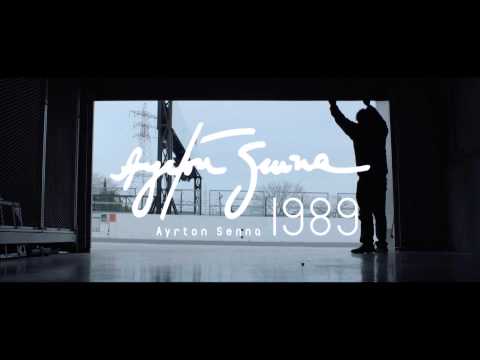 2013
Sound of Honda / Ayrton Senna 1989
Recreating a racing legend's record lap from telemetry lets the brand borrow his aura for a navigation service built on driving data.
Testimonial and endorsement
Testimonial is a propaganda technique in which a respected or famous person, or a seemingly ordinary customer, vouches for a product, idea or candidate, so that trust in the speaker carries over to the claim.
-
 2013
The Epic Split
Jean-Claude Van Damme stakes his body on the trucks' steering, putting a recognisable face on a technical feature sold to fleet buyers.
-
 1893
Divan Japonais
Prominently featuring the dancer Jane Avril and singer Yvette Guilbert implies you might see such stars there, though neither then performed at the venue.
-
 2018
Dream Crazy
Kaepernick fronts and narrates the film, lending his own sacrifice to a message about chasing impossible ambitions whatever the cost.
Testimonial and endorsement: all 36 examples and the full guide
Plain folks
Plain folks is a propaganda technique in which a politician, brand or speaker presents themselves as ordinary and down to earth, just like the audience, so that their ideas seem trustworthy and sensible.
-
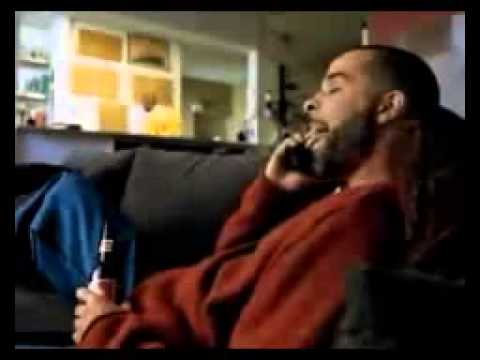 1999
Whassup?
Casts the director's real childhood friends greeting each other in their own vernacular, so the beer belongs to ordinary mates rather than polished actors.
-
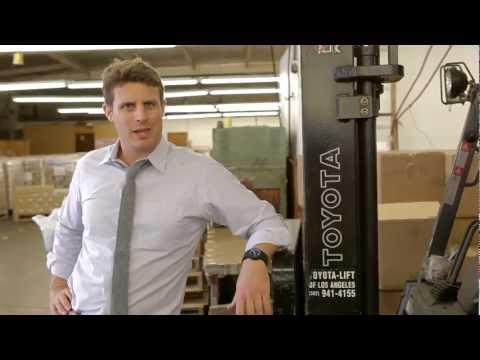 2012
Our Blades Are F***ing Great
Shot by a friend in a warehouse for a few thousand dollars, the founder's straight-talking pitch presents the startup as unpretentious and down to earth.
-
 2016
The Swedish Number
Puts ordinary volunteers, with no training or script, on the line as the country's ambassadors instead of polished tourism claims.
Card stacking
Card stacking is a propaganda technique that builds a one-sided case: favourable facts are played up, awkward ones left out, and half-truths presented as the whole truth, so only one conclusion seems possible.
-
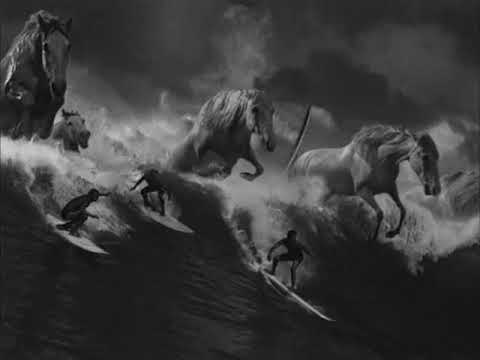 1999
Surfer
Recasts the long wait for a properly settled pint, an operational drawback, as the patient virtue that defines the whole brand.
-
Reassuringly expensive.Stella Artois1982
Reassuringly Expensive
Two words recast a premium price, usually a drawback, as reassuring proof of quality.
-
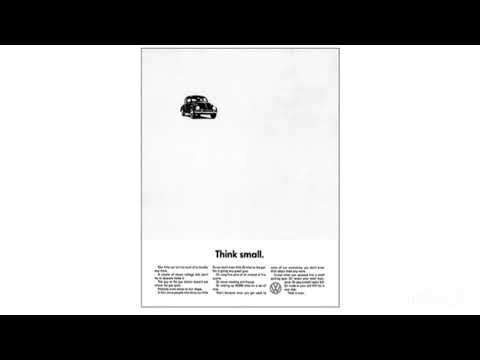 1959
Think Small
Calling the car small and even a lemon turns its apparent weaknesses into reasons to trust and buy it.
Bandwagon
Bandwagon is a propaganda technique that urges people to join in because everyone else already has: crowds, popularity claims and the fear of being left out stand in for reasons.
-
Share a Coke with...Coca-Cola2011
Share a Coke
As people hunted for their names and posted the bottles, the search became self-sustaining social content, making a named Coke feel like something everyone was getting.
-
Windows. Life without walls.Microsoft (Windows)2008
I'm a PC
A procession of PC users from around the world, from scientists to celebrities, each declare “I'm a PC”, presenting Windows as the choice of a billion people.
-
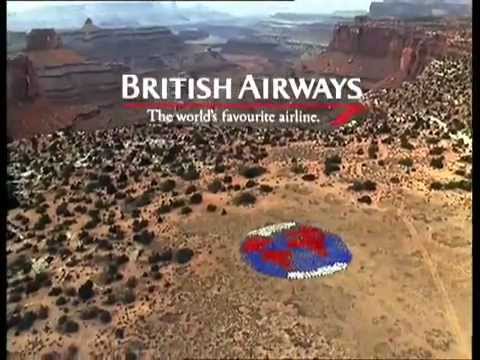 1989
Face
Thousands of people assemble into one smiling face while the voiceover counts millions brought together, literally picturing the claim to be the world's favourite.
Beyond the seven
The IPA's list was never complete, and later critics have added to it. Three devices come up constantly in advertising and politics.
Fear
A fear appeal shows a threat and offers a way out: buy this, do this, vote this way. The most famous political example in this directory, Lyndon Johnson's Daisy (1964), never names its target and lets a nuclear countdown do the arguing.
Repetition
Saying something again and again makes it seem truer. In a 1977 study, Lynn Hasher, David Goldstein and Thomas Toppino found that people rated repeated statements as more likely to be true than new ones, and the effect was the same for false statements as for true ones. Slogans, jingles and endlessly repeated nicknames rely on this (see mere exposure).
Scapegoating
Scapegoating blames a single group for a nation's troubles. Nazi propaganda held Jews responsible for causing the Second World War, as the United States Holocaust Memorial Museum documents. It combines name-calling with a false story of cause and effect, and it is the device with the darkest record.
How the seven overlap
The devices are not separate boxes; most strong ads use several at once. Born of Fire (2011) uses Eminem as a testimonial, borrows Detroit's pride through transfer and turns the city's decline into an argument for the car, a reframing this directory files under card stacking. Prouder, Stronger, Better (1984) pairs glittering generalities with the transfer of flag-raisings. Name-calling and glittering generalities usually travel together, warm words for one side and ugly ones for the other. Spotting one device is a cue to look for the others.
How to analyse an ad for propaganda
- Who made it, who paid for it, and what do they want you to do?
- Cross out the words that carry feeling, good or bad. What claim is left?
- Which symbols, famous faces or crowds are borrowed, and what is their real link to the product?
- What is missing: the price, the conditions, the side effects, the other side's case?
- Check every number: who counted, what was asked, and compared with what?
- Notice your own reaction. Which feeling is the ad trying to produce, and why?
- Judge the idea on its merits once the devices are set aside.
The IPA ended The Fine Art of Propaganda with three short rules that still work: "Don't be stampeded. Beware of your own prejudices. Suspend your judgment until more sides of the issue are presented."
Questions people ask
What are the 7 types of propaganda?
The seven propaganda techniques are name-calling, glittering generalities, transfer, testimonial, plain folks, card stacking and bandwagon. They were set out by the Institute for Propaganda Analysis in New York in 1937.
Who created the 7 propaganda techniques?
The Institute for Propaganda Analysis published them in the second issue of its bulletin, Propaganda Analysis, in November 1937. The historian J. Michael Sproule credits the list to the Institute's driving force, the journalist and educator Clyde R. Miller of Columbia University's Teachers College.
What is the most common propaganda technique in advertising?
There is no agreed count. The Institute for Propaganda Analysis thought name-calling "perhaps the most common of all propaganda devices" in general, but in commercial advertising testimonials and transfer, famous faces and borrowed symbols, are everywhere, and they are among the most common of the seven in this directory.
Is advertising propaganda?
Advertising uses the same devices, and the Institute for Propaganda Analysis's own examples included cigarette ads. Most people reserve the word propaganda for political, wartime or ideological persuasion, but an ad that hides facts or manipulates feelings to sell is using propaganda techniques.
Is propaganda always bad?
No. The Institute for Propaganda Analysis said propaganda could serve good or bad ends, and that socially desirable ideas would not suffer from careful examination. The danger lies in being persuaded without knowing how.
What is the difference between propaganda and persuasion?
All propaganda is persuasion, but not all persuasion is propaganda. Propaganda is deliberate and leans on manipulation, such as selecting, distorting or hiding facts, while honest persuasion invites scrutiny of its evidence.
Where does the word propaganda come from?
From the Catholic Church's congregatio de propaganda fide, a committee of cardinals for the propagation of the faith founded in 1622. Its present political meaning dates from the early 20th century.
What is The Fine Art of Propaganda?
The Fine Art of Propaganda is a 1939 book by the Institute for Propaganda Analysis, edited by Alfred McClung Lee and Elizabeth Briant Lee. It applied the seven propaganda devices to the radio speeches of Father Charles Coughlin, showing how each one worked in practice.
Sources8
- Propaganda Analysis, Volume I (includes “How to Detect Propaganda”, the bulletin’s second issue, 1937)
- The Fine Art of Propaganda (excerpts from the Institute for Propaganda Analysis book, ed. Alfred McClung Lee and Elizabeth Briant Lee, 1939)
- Authorship and Origins of the Seven Propaganda Devices: A Research Note
- Glittering Generalities: Reconsidering the Institute for Propaganda Analysis
- Propaganda
- propaganda (noun): definition and word origin
- Frequency and the Conference of Referential Validity
- War 1939–1945: The Eternal Jew (State of Deception: The Power of Nazi Propaganda)
More guides
-
Ethos, pathos and logos in advertising
Ethos, pathos and logos are the three rhetorical appeals: persuasion through the speaker’s credibility, the audience’s emotions and the argument itself. Here is what each means, with real ads that use them and a checklist for spotting them.
5 min read
-
How to analyse an advert
To analyse an advert, establish its context and audience, describe what it shows and says, identify its message, appeals and techniques, then judge its effect with evidence. Here is a six-step method, worked through on Volkswagen’s “Think Small”.
7 min read
-
What is a slogan? Examples, and what makes one work
A slogan is a short, memorable phrase that a brand, campaign or cause repeats to sum up what it stands for, such as Nike’s “Just Do It.” Here is how slogans differ from taglines and jingles, where the word comes from, and what the lasting ones share.
6 min read