Technique
Glittering generalities
Glittering generalities are vague, feel-good words such as freedom, hope or perfection, used so that people approve of something without asking what it actually means or promises.
What are glittering generalities?
Glittering generalities are emotionally appealing words and phrases, such as "freedom", "hope", "family", "progress" or "the best", used so that the audience approves of something without asking what it actually means or promises. They are virtue words. Nearly everyone is in favour of freedom and progress, so linking a product, a party or a war to them borrows that approval without having to prove anything.
The trick is vagueness. "Democracy" or "a better future" means something slightly different to each listener, and each listener tends to assume the speaker means what they mean. A slogan built on such words is hard to prove false, because it makes no specific claim. The words themselves are not the problem. The problem is using them in place of a case.
Where the term comes from
The phrase is older than the study of propaganda. In an 1856 letter to Maine Whigs, the orator Rufus Choate dismissed "the glittering and sounding generalities of natural right which make up the Declaration of Independence". Ralph Waldo Emerson replied that the generalities were "blazing ubiquities".
In 1937 the Institute for Propaganda Analysis (IPA) made glittering generalities the second of its seven propaganda devices. Its bulletin, Propaganda Analysis, said the propagandist "identifies his program with virtue by use of 'virtue words'", and gave a list: "truth, freedom, honor, liberty, social justice, public service, the right to work, loyalty, progress, democracy, the American way, Constitution defender". In The Fine Art of Propaganda (1939), its study of Father Charles Coughlin's radio speeches, the IPA defined the device as "associating something with a 'virtue word'" and gave it a symbol: a glittering gem "that may or may not have its apparent value".
The book warned that a listener who hears "democracy" and assumes the speaker shares their meaning may soon be "sold" an anti-democratic idea in democratic dress, which it called "one of Father Coughlin's tricks". Coughlin's own movement was the National Union for Social Justice, and his weekly was called Social Justice; the United States Holocaust Memorial Museum records how that paper spread antisemitic conspiracy theories under its virtuous name.
How to spot it
- Big abstract nouns (freedom, hope, change, excellence, the future) with no detail attached.
- A slogan that almost nobody could disagree with, and nobody could test.
- Superlatives with no measure: "perfect", "the best", "world-class".
- The product or candidate is barely described; a mood or an ideal is.
- Lofty language out of proportion to the thing being sold.
- Ask: what exactly is being promised, by when, and how would I know if it failed?
Examples
Hope (2008)
Shepard Fairey's Hope poster puts a single word under a portrait of Barack Obama gazing towards the horizon. It sells an ideal rather than any policy, and its first caption was another virtue word: "Progress".
Morning in America (1984)
Ronald Reagan's re-election film Prouder, Stronger, Better shows commuters, weddings and flag-raisings and promises a country that is prouder, stronger and better. The words set a mood and commit to nothing measurable.
Forever, perfection and freedom
Brands use the same device. A Diamond Is Forever (1947) promises nothing you could measure about a stone; the word "forever" does all the work. Absolut Perfection (1980) claims perfection in a single word. And in Torches of Freedom (1929), the publicist Edward Bernays, working for Lucky Strike, had young women light cigarettes at New York's Easter Parade and call them torches of freedom, wrapping a sales push in the language of women's equality.
Slogans and word lists
Campaign slogans on all sides use the device. Propaganda Critic lists George W. Bush and Dick Cheney's "A Safer World and More Hopeful America" (2004), John Kerry and John Edwards's "A Stronger America" (2004) and Al Gore and Joe Lieberman's "Prosperity and Progress" (2000). Newt Gingrich's committee GOPAC went further, giving Republican candidates a glossary of "optimistic positive governing words", such as "truth", "moral", "courage", "family" and "peace", to use about themselves.
Why it works, and where it fails
Virtue words lower our guard. The IPA put it plainly: when we hear a word like "democracy" we assume the speaker means it our way, and "this lowers our 'sales resistance'". Abstract ideals are hard to argue with, and they let a brand stand for something larger than its product. That is also why such slogans last: they mean whatever each audience brings to them.
They fail when the gap between the word and the reality becomes visible. A promise of "freedom" from a cigarette company now reads as a stunt, and Torches of Freedom is remembered mostly as a sales promotion dressed up as a cause. Vague words also invite the obvious question, "what does that mean?", and a speaker who cannot answer it looks empty.
Glittering generalities vs bandwagon
The two are often confused because both feel uplifting. Bandwagon says "everyone is doing it, so join in"; glittering generalities say "this stands for something good, so approve of it". The first sells popularity, the second sells virtue. A line such as "Join the movement for a better future" uses both.
Glittering generalities vs transfer
Transfer borrows the prestige of a symbol, such as a flag, a cross or a famous painting; glittering generalities borrow the prestige of a word. Think Different (1997) does both: the line is a glittering generality, and the footage of Einstein, Picasso and Martin Luther King is transfer.
Glittering generalities vs name-calling
The IPA called the glittering generality "Name Calling in reverse": one uses good words to win approval without evidence, the other uses bad words to win rejection without evidence. See name-calling.
How to answer it
The IPA suggested four questions. What does the virtue word really mean? Does the idea have a legitimate connection with that meaning? Is an idea that does not serve my interests being "sold" to me just by giving it a name I like? And, leaving the virtue word out, what are the merits of the idea itself? A practical test is to rewrite the slogan without its abstract words and see what claim, if any, is left.
Every ad here that uses glittering generalities16
-
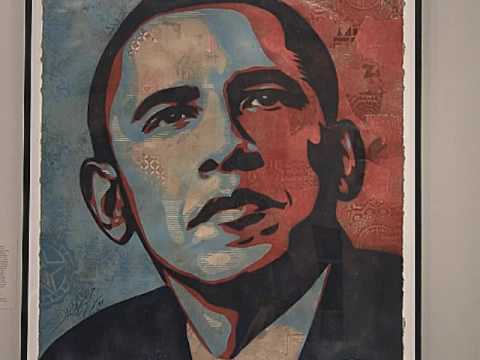 2008
Hope
A single uplifting word beneath a portrait gazing towards the horizon sells an ideal rather than any specific policy.
-
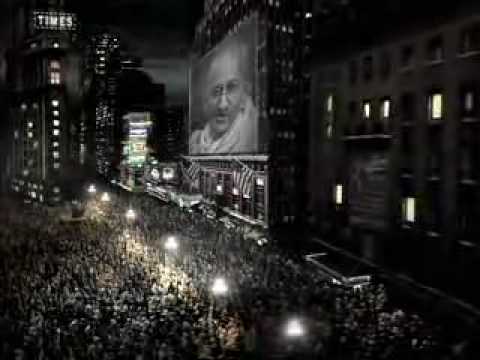 2004
Gandhi
Sells the lofty idea of connection, summed up as communication being life, rather than any specific service.
-
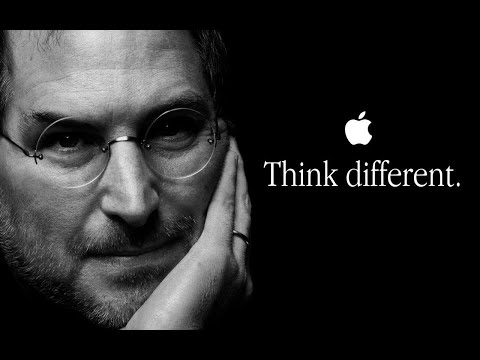 1997
Think Different ("The Crazy Ones")
A prose poem saluting misfits who change the world sells an ideal of thinking differently while promising nothing specific about any product.
-
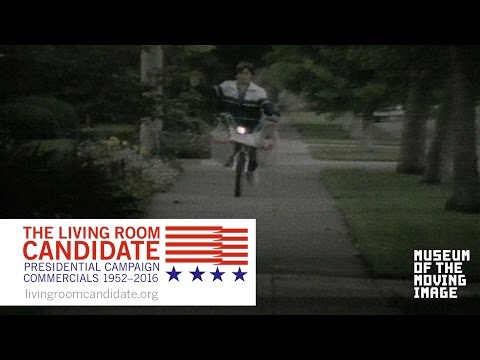 1984
Prouder, Stronger, Better ("Morning in America")
Promises a country that is prouder, stronger and better, feel-good words that set the mood but commit to nothing specific.
-
 1981
Be All You Can Be
Reframes enlistment from obligation or last resort into self-fulfilment, an uplifting ideal that promises personal growth without specifics.
-
Absolut Perfection.Absolut Vodka1980
Absolut Perfection
Claiming perfection in a single word praises the vodka in lofty terms that promise nothing specific.
-
A diamond is forever.De Beers1947
A Diamond Is Forever
The vague ideal of forever promises nothing measurable about the stone, yet makes selling one on feel unthinkable.
-
 1943
Americans Will Always Fight for Liberty
'Liberty' is left undefined, a word everyone approves of and no one would argue against.
-
The Four Freedoms postersOffice of War Information (US)1943
The Four Freedoms posters
Speech, worship, want and fear are abstract ideals, made concrete enough to buy bonds for.
-
Freedom is in peril. Defend it with all your mightMinistry of Information (UK)1939
Freedom Is in Peril – Defend It with All Your Might
'Freedom' is the whole argument, left undefined; contemporaries found it too abstract to move anyone.
-
Your courage, your cheerfulness, your resolution will bring us victoryMinistry of Information (UK)1939
Your Courage, Your Cheerfulness, Your Resolution Will Bring Us Victory
Courage, cheerfulness and resolution are virtues everyone approves of, offered with no instruction attached.
-
 1939
Futurama (Highways and Horizons)
Sells no particular car, only a shining vision of the future, summed up by a pin telling riders they have seen it.
-
Torches of FreedomLucky Strike (American Tobacco Company)1929
Torches of Freedom
Recasts cigarettes as torches of freedom, wrapping a sales push in the virtue language of women's equality.
-
Soaring to Success! Daily Herald – the Early BirdDaily Herald1919
Soaring to Success! Daily Herald – the Early Bird
The caption declares the paper is soaring to success, a feel-good boast that says nothing specific about the newspaper itself.
-
 1915
The Penalty of Leadership
Lofty ideas about leadership and what deserves to live replace any specifics, persuading through noble sentiment alone.
-
 1915
Your Country's Call
Offers an ideal of home, thatched cottages and green hills, instead of any specific aim of the war.
Questions people ask
What are glittering generalities?
Glittering generalities are vague, emotionally appealing words such as "freedom", "hope" or "progress", used so that people approve of something without asking what it means. The Institute for Propaganda Analysis named them as one of its seven propaganda devices in 1937.
What is an example of glittering generalities?
The 2008 Hope poster of Barack Obama sells one virtue word rather than any policy, and De Beers's slogan "A Diamond Is Forever" promises nothing measurable about the stone. The Institute for Propaganda Analysis gave its own list of such words in 1937, including "truth", "freedom", "honor", "progress" and "the American way".
What is the difference between glittering generalities and name-calling?
They are opposites. Glittering generalities use virtue words to make you accept something without evidence, while name-calling uses bad labels to make you reject something without evidence. The Institute for Propaganda Analysis called the glittering generality "Name Calling in reverse".
Who coined the term glittering generalities?
The phrase goes back to an 1856 letter in which the orator Rufus Choate dismissed "the glittering and sounding generalities of natural right" in the Declaration of Independence. The Institute for Propaganda Analysis adopted it as the name of a propaganda device in 1937.
What is the difference between glittering generalities and bandwagon?
Glittering generalities sell virtue ("this stands for freedom"), while bandwagon sells popularity ("everyone is joining"). Many slogans use both at once.
Are glittering generalities a logical fallacy?
Not in themselves, since words such as "freedom" can be used honestly with a clear meaning. They become faulty reasoning when the virtue word replaces the evidence, so that you agree with a claim because of how it sounds rather than what it says.
Why do advertisers use glittering generalities?
Virtue words attach a brand to an ideal people already value, are hard to argue with and make no specific promise that could be shown to be false. The same vagueness lets each viewer read their own meaning into the slogan.
Sources8
- Propaganda Analysis, Volume I (includes “How to Detect Propaganda”, the bulletin’s second issue, 1937)
- The Fine Art of Propaganda (excerpts from the Institute for Propaganda Analysis book, ed. Alfred McClung Lee and Elizabeth Briant Lee, 1939)
- The Iconography of Propaganda Analysis (excerpts from The Fine Art of Propaganda, 1939)
- The Way We Live Now: 7-4-04: On Language; 7/4/Oratory
- Rufus Choate (Samuel Arthur Bent, Familiar Short Sayings of Great Men)
- Glittering Generalities
- Gingrich's Plan for Power 10 Years in the Making
- The Radio Priest: Charles E. Coughlin and American Antisemitism