Technique
Guerrilla and ambient
Guerrilla marketing is unconventional, often low-cost advertising that surprises people in places ads don't normally go, so they share it and the press covers it. These are the best guerrilla and ambient examples, and why they worked.
What is guerrilla marketing?
Guerrilla marketing is unconventional advertising that wins attention through surprise instead of media spend. It puts a message where nobody expects an ad, or turns an everyday object or place into one, so that passers-by stop, talk about it and share it. Many guerrilla ideas cost little to make; most of their reach comes from the people and the press who pass them on.
Where it comes from
The term comes from Jay Conrad Levinson, a former advertising creative whose book Guerrilla Marketing: Secrets for Making Big Profits from Your Small Business was published by Houghton Mifflin in 1984. As the subtitle says, it was written for small businesses. Levinson went on to write or co-write some 60 books, which sold more than 20 million copies.
The tactics are older than the name. At Chicago's 1893 world's fair, H. J. Heinz scattered tags promising a free souvenir to draw crowds up to his booth on an upper floor (The Pickle Pin). From 1925 Burma-Shave planted rhyming signs along American highways (Burma-Shave Roadside Verses), and in 1929 Edward Bernays had young women light cigarettes in New York's Easter Parade so that the stunt read as news (Torches of Freedom).
In the mid-1990s, by its own account, the British outdoor specialist Concord coined "ambient" for the non-traditional sites that had been dismissed as "fringe media"; its own forecast put UK spending on ambient at £84.2m in 2000, against £17.4m in 1994. In 2011 the researchers Katharina Hutter and Stefan Hoffmann described guerrilla marketing as an umbrella for ambient, sensation, viral, buzz and ambush marketing, all aiming for a large effect on a small budget.
How to spot it
- It appears where advertising does not normally go: a staircase, a pavement, a statue, a cash machine.
- It uses its surroundings as part of the idea, so it would not work anywhere else.
- It is surprising enough that people photograph it, film it or tell others.
- Press coverage and sharing carry most of the reach, not bought media.
- It often borrows someone else's space or event, sometimes without asking.
The best examples
- Piercing (Oslo Piercing Studio, 2001). Close-ups of chins, tongues and navels were pasted so that nails and fixtures already on the walls poked through where a piercing would sit. No media was bought, and it won the first Outdoor Grand Prix awarded at Cannes.
- Let's Motor (MINI USA, 2002). Real MINIs mounted on top of SUVs helped launch a small car in America with one TV spot in its first year. The placement made the anti-SUV argument without a word.
- The Fun Theory (Volkswagen, 2009). Stockholm subway stairs became working piano keys, and 66% more people than usual took the stairs. A street experiment became an online film.
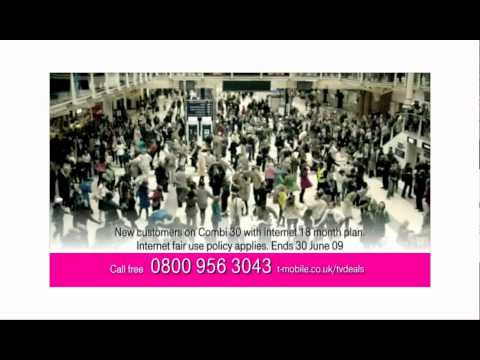
- Dance (T-Mobile, 2009). Some 350 dancers hidden in the rush-hour crowd at London's Liverpool Street station broke into a routine. It was planned from the start as live event, TV commercial and news story at once.
- Fearless Girl (State Street Global Advisors, 2017). A bronze girl installed overnight to face Wall Street's Charging Bull. One object, with no media buy, won four Grand Prix at Cannes.
- Whopper Detour (Burger King, 2018). A one-cent Whopper unlocked in the app only within 600 feet of a McDonald's. It turned a rival's 14,000 restaurants into Burger King's media and drove 1.5 million app downloads.
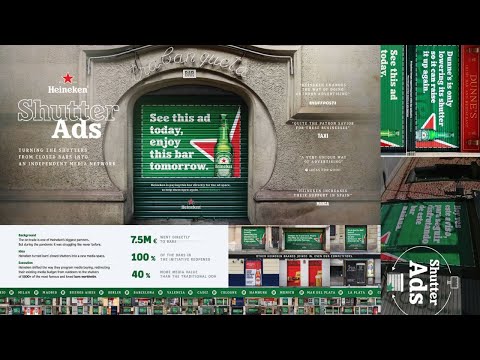
- Shutter Ads (Heineken, 2020). The shutters of bars closed by Covid were rented as poster sites, so the media money went to the bars themselves. It won the Outdoor Grand Prix at Cannes in 2021.
Why it works, and when it backfires
Surprise does most of the work. Hutter and Hoffmann argue that an ad met where no ad is expected clashes with people's expectations, so it is processed more deeply, and that surprised people tell others, spreading the message at little extra cost. Most of the examples above reached far more people through photographs, news reports and online film than they did on the street.
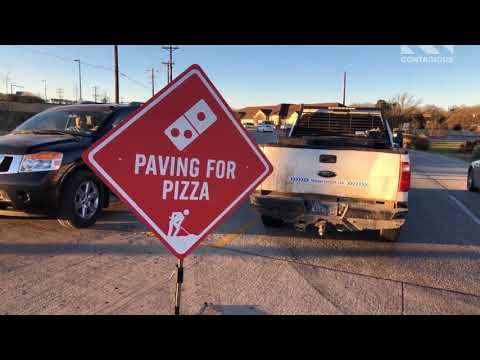
The same unpredictability is the risk. At the end of January 2007, battery-powered light boards promoting Cartoon Network's Aqua Teen Hunger Force were mistaken for bombs in Boston, and officials closed a highway, bridges, subway stations and part of the Charles River for hours. Turner Broadcasting and its agency, Interference, paid $2 million to settle. Borrowed spaces raise other questions: Domino's Paving for Pizza drew criticism on social media about why a pizza chain was fixing public roads, and Fearless Girl was followed by a rights dispute with its sculptor and a gender-pay settlement at the company that commissioned it. Guerrilla ideas are also hard to repeat and to measure: Hutter and Hoffmann noted in 2011 that there was little empirical evidence on how well they work.
Guerrilla, ambient or experiential?
The labels overlap and are used loosely, but they describe different things.
- Guerrilla is the broad strategy: unconventional, surprising, usually low-cost activity that relies on people and the press to spread it.
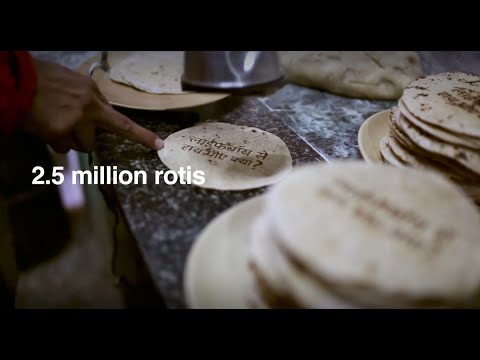
- Ambient is the medium: the message is built into the environment, on objects and surfaces not sold as ad space. Piercing used the walls' own nails, and Lifebuoy's Roti Reminder heat-stamped a handwashing message onto some 2.5 million rotis at the 2013 Kumbh Mela.
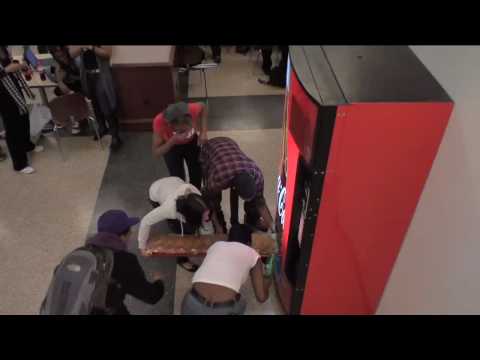
- Experiential is the event: the brand stages something people take part in, usually filmed for a much larger audience. Dance and Coca-Cola's Happiness Machine, a rigged vending machine in a university cafeteria, are experiential.
- Ambush is guerrilla aimed at an event someone else has paid for, as Bavaria did at the 2010 World Cup with its Dutch Dress.
One campaign can be all of these: Fearless Girl was an ambient object, a staged moment and a piece of guerrilla PR. For ideas the audience completes by joining in, see participation.
Every ad here that uses guerrilla and ambient33
2020s
-
 2021
Unexpected Guest
A mysterious spaceship appeared in UK cities two days before the film was released.
-
 2021
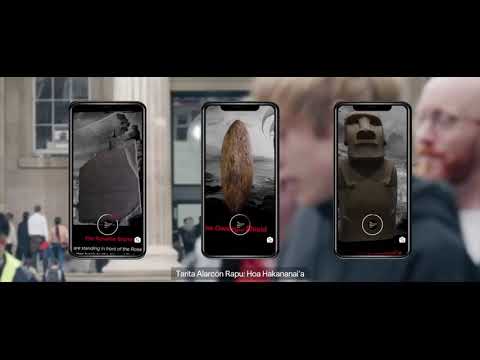
The Unfiltered History Tour
Runs an unofficial tour inside the British Museum without its permission, using visitors' phones to annotate someone else's galleries.
-
 2020
Shutter Ads
Roll-down shutters, windows and facades of closed venues become poster sites, making the dark bars themselves both the medium and the message.
2010s
-
Order a Whopper for a penny — at McDonald's.Burger King2018
Whopper Detour
Geofencing more than 14,000 rival restaurants turns a competitor's own real estate into the trigger for Burger King's promotion.
-
 2018
Paving for Pizza
Stencils the brand onto repaired asphalt, so each patched street becomes a local billboard and a local news story.
-
Know the power of women in leadership. SHE makes a difference.State Street Global Advisors2017
Fearless Girl
Installs a bronze girl overnight, staring down Wall Street's Charging Bull with no media buy, so a single object becomes the campaign.
-
 2015
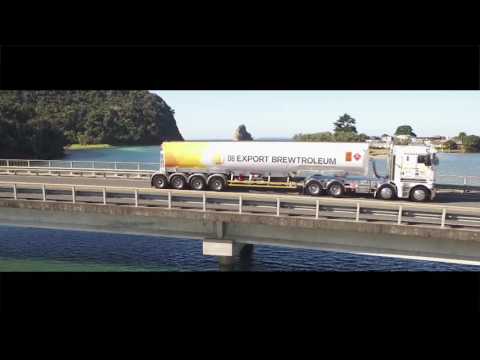
Brewtroleum
Uses petrol pumps as ambient media, with the beer's own fuel on sale at stations and a flagship forecourt.
-
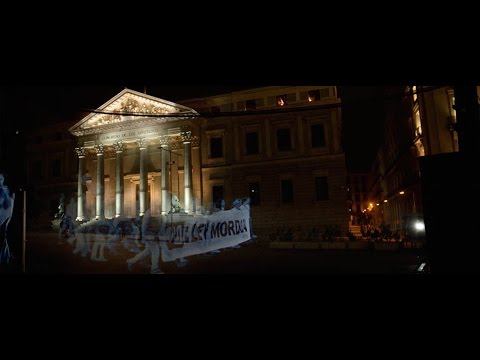 2015
Holograms for Freedom
Projects the protest outside the Congress of Deputies at night under a film-shoot permit, turning the restriction itself into the message.
-
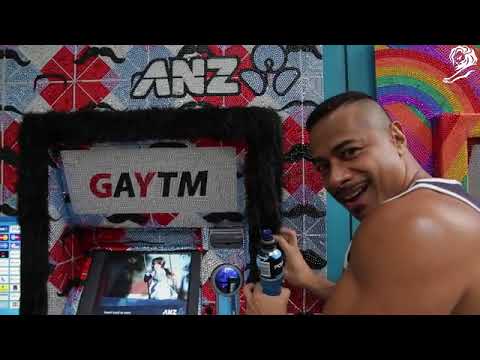 2014
GAYTMs
Ordinary street cash machines are dressed in rhinestones, studs and fur, turning the bank's own hardware into outdoor media people use and photograph.
-
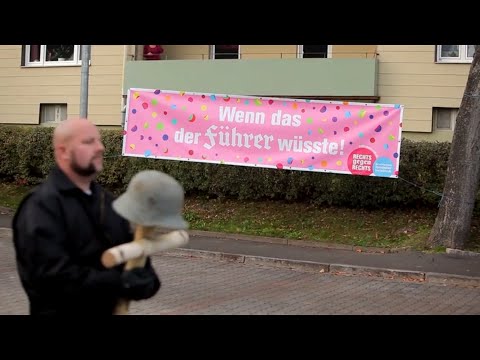 2014
Nazis Against Nazis ("Rechts gegen Rechts")
Dresses a neo-Nazi march route as a sponsored charity walk, with start and finish lines and banners, on a tiny budget.
-
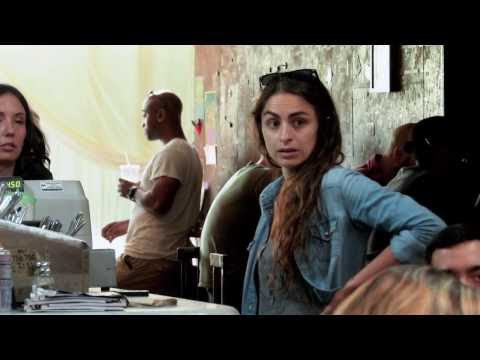 2013
Telekinetic Coffee Shop Surprise
A New York coffee shop is secretly rigged with a false wall, remote-controlled furniture and spring-loaded books, turning an everyday space into a film set.
-
 2013
Roti Reminder
Heat-stamps the handwashing question onto rotis served at festival eateries, a medium nobody can skip.
-
 2012
A Dramatic Surprise on a Quiet Square ("Push to Add Drama")
Stages a rapid chain of mayhem in a quiet market square, from an ambulance to a shoot-out, before a banner unrolls.
-
 2012
Bridge of Life
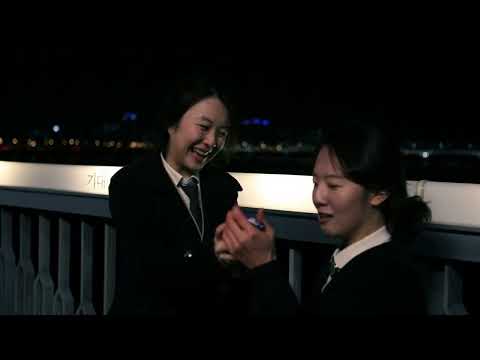
Turns the guardrails of a public bridge into the medium, with sensors lighting up messages as pedestrians walk past.
-
 2012
The Invisible Drive
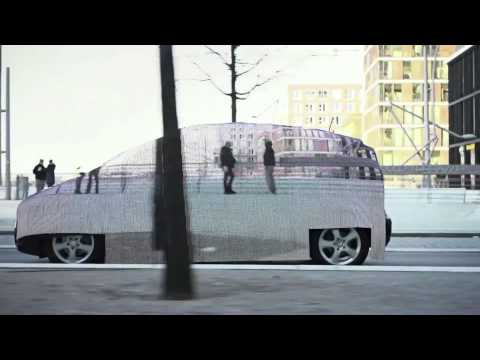
Drives the seemingly see-through car through city streets, letting passers-by and then online viewers encounter the uncanny sight.
-
 2010
Happiness Machine
A rigged vending machine is slipped into a university cafeteria overnight and filmed by hidden cameras, turning an everyday spot into a surprise.
-
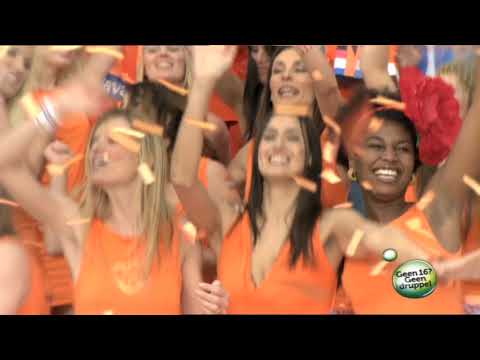 2010
Dutch Dress
Ambushes the World Cup with an almost unbranded orange dress, so the heavy-handed ejections become a worldwide story.
-
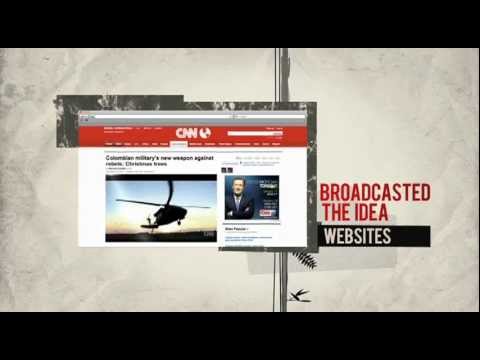 2010
Operation Christmas
Places motion-triggered lit trees in FARC-controlled jungle and along guerrilla routes, taking advertising behind the lines of a civil war.
2000s
-
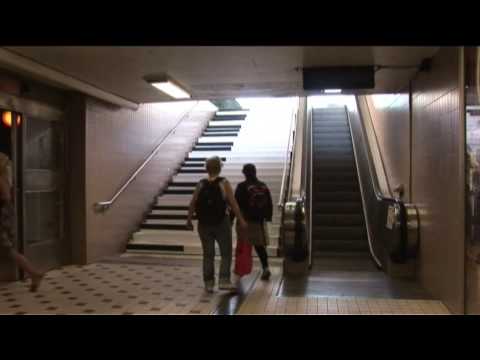 2009
The Fun Theory ("Piano Stairs")
Subway stairs in Stockholm are turned into working piano keys and filmed as commuters abandon the escalator, a playful real-world intervention.
-
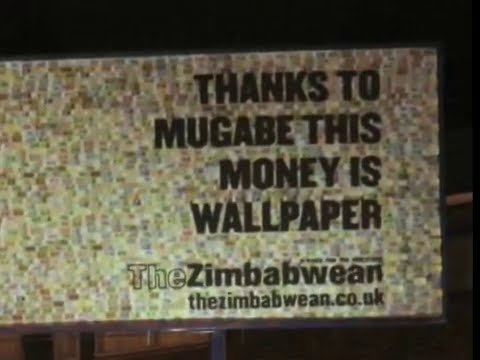 2009
The Trillion Dollar Campaign
Banknotes become flyers, posters, murals and billboards, an unconventional medium that is literally cheaper than paper.
-
 2009
Dance (Life's for Sharing)
Hides hundreds of dancers in a rush-hour station crowd, turning a commuter concourse into a surprise performance filmed for television.
-
 2009
Teletransporter
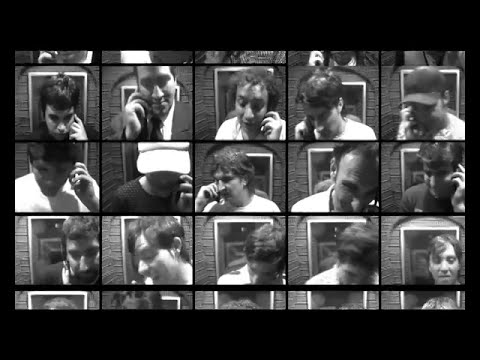
Places soundproof booths inside bars, so the medium is used at the very moment the beer is being drunk.
-
 2007
Why So Serious? (The Dark Knight alternate reality game)
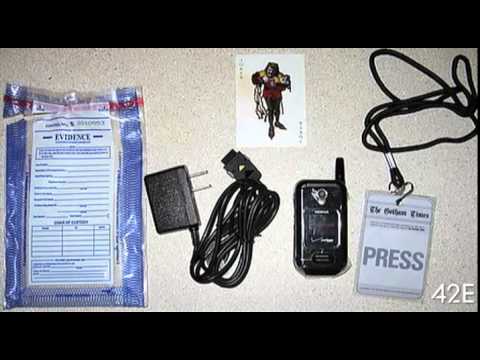
Joker cards in comic shops, phones baked into cakes and real-world scavenger hunts carry the game off the screen into surprising physical places.
-
 2006
Sundial
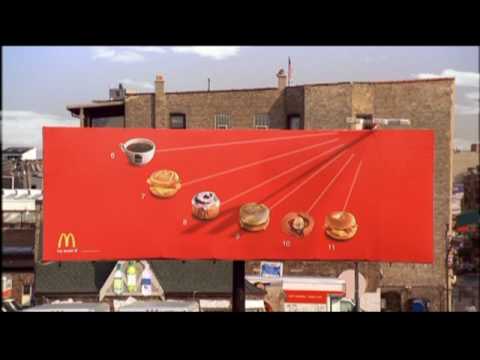
Built near Wrigley Field with no screens or sensors, only geometry, the board turns a static street poster into a working sundial passers-by can check daily.
-
Vertical Footballadidas2003
Vertical Football
Turns a billboard into a live pitch, with two real players competing on ropes high above the street as crowds gather.
-
Let's Motor.MINI USA (BMW Group)2002
Let's Motor (MINI USA launch)
Real cars mounted on top of SUVs and other street placements launch the brand without the usual television spend.
-
PiercingOslo Piercing Studio2001
Piercing
Fly-posted close-ups of body parts are pasted so that nails and fixtures already on the walls poke through exactly where a piercing would sit.
1930s

1920s
-
Torches of FreedomLucky Strike (American Tobacco Company)1929
Torches of Freedom
Plants women lighting cigarettes in the Easter Parade on Fifth Avenue so the stunt reads as news rather than advertising.
-
Within this vale / of toil / and sin / your head grows bald / but not your chin — Burma-ShaveBurma-Shave1925
Burma-Shave Roadside Verses
Small signs planted along highways, each carrying one line paced to a passing car, invent a medium out of the roadside.
-
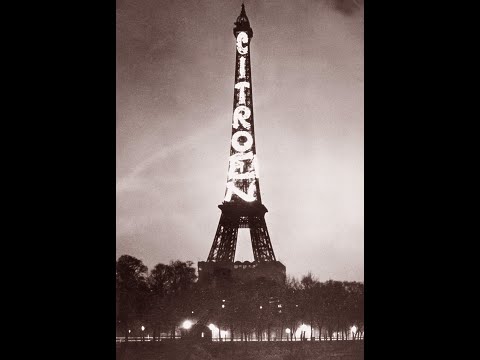 1925
Citroën on the Eiffel Tower
Turns a city landmark into an animated light sign, a surprising placement that some Paris papers attack as a disfigurement.
-
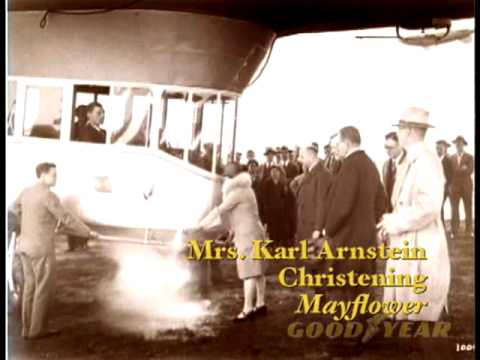 1925
The Goodyear Blimp
Turns an airship into an airborne billboard over cities, and later into a camera platform that floats the name into live broadcasts.
1890s
Questions people ask
What is guerrilla marketing?
Guerrilla marketing is unconventional, usually low-cost advertising that surprises people in places they do not expect an ad, such as streets, stairs or statues, so that they share it and the press covers it. The term comes from Jay Conrad Levinson's 1984 book Guerrilla Marketing.
Who invented guerrilla marketing?
Jay Conrad Levinson coined the term in the early 1980s and set it out in his 1984 book Guerrilla Marketing: Secrets for Making Big Profits from Your Small Business. The tactics are older: Heinz's 1893 pickle pins and Burma-Shave's roadside signs from 1925 used the same thinking.
What are some famous guerrilla marketing examples?
Well-known examples include the Oslo Piercing Studio posters that used nails on walls as jewellery (2001), Volkswagen's piano stairs in Stockholm (2009), State Street's Fearless Girl statue on Wall Street (2017) and Burger King's Whopper Detour (2018).
What is the difference between guerrilla and ambient marketing?
Guerrilla marketing is the broad strategy of surprising, unconventional, low-cost advertising. Ambient marketing is one form of it, in which the message is built into the surroundings, on objects and surfaces not normally sold as ad space.
Why does guerrilla marketing work?
It relies on surprise: an ad found where none is expected gets more attention, and surprised people photograph it and tell others. Researchers Katharina Hutter and Stefan Hoffmann describe this as a surprise effect, a diffusion effect and a low-cost effect.
What are the risks of guerrilla marketing?
The public can misread it, and authorities may treat it as a nuisance or a threat. In 2007 light boards advertising a Cartoon Network show were mistaken for bombs in Boston, and Turner Broadcasting and its agency paid $2 million to settle.
Sources5
- Guerrilla Marketing: Secrets for Making Big Profits from Your Small Business
- 'Father of guerrilla marketing' Jay Conrad Levinson has died
- Guerrilla Marketing: The Nature of the Concept and Propositions for Further Research
- Advertisers embrace ambient opportunities
- Boston Reaches Settlement in Bomb Scare