Technique
Name-calling
Name-calling is a propaganda technique that pins a bad label on a person, group or idea so that people reject it without looking at the evidence. The label can be a slur, a nickname, a loaded word or a monstrous picture.
What is name-calling?
Name-calling is a propaganda technique that gives a person, group or idea a bad label so that the audience rejects it without looking at the evidence. The label does the arguing. Instead of showing what an opponent has done, or what a policy would cost, the propagandist attaches a word that already carries fear or contempt, such as "traitor", "extremist", "Red" or "parasite", and lets that feeling do the work.
The label does not have to be a swear word. A loaded term ("regime" instead of "government", "scheme" instead of "plan"), a nickname repeated until it sticks, or a picture can do the same job: a rival drawn as an animal, a monster or a pair of glowing eyes. Name-calling is most at home in political attack ads and wartime posters. Commercial brands use it more cautiously, usually as mockery of a rival they do not name.
Where the term comes from
Name-calling is the first of the seven propaganda devices listed by the Institute for Propaganda Analysis (IPA), an educational body set up in New York in 1937 to teach Americans to recognise propaganda. In the second issue of its bulletin, Propaganda Analysis, it described name-calling as "a device to make us form a judgment without examining the evidence on which it should be based". It listed the bad names of the day, among them "Fascist", "demagogue", "Red", "Communist", "outside agitator", "economic royalist" and "Constitution wrecker", and said that using bad names without explaining them was "perhaps the most common of all propaganda devices".
In The Fine Art of Propaganda (1939), a study of Father Charles Coughlin's speeches edited by Alfred McClung Lee and Elizabeth Briant Lee, the IPA boiled the definition down to "giving an idea a bad label". The book gave each device a symbol. Name-calling's is a thumb turned down, which the book called the ancient sign of condemnation in the Roman Colosseum.
How to spot it
- A label takes the place of a reason: you are told what to call someone, not what they did.
- The word is vague enough to fit almost anyone, such as "elite", "radical" or "extremist", so each listener supplies their own worst meaning.
- People are drawn or described as animals, vermin, disease or monsters.
- A nickname for an opponent is repeated until it replaces their real name.
- Take the label out and ask what evidence is left. If the answer is "none", it is name-calling.
Examples
"Washington or Moscow" (1936)
The IPA drew its first examples from 1930s American politics, on more than one side. Its bulletin noted that the former presidential candidate Al Smith had called Franklin Roosevelt a Communist by implication when he said in a speech to the Liberty League, "There can be only one capital, Washington or Moscow." It also pointed out that the Hearst press pinned bad names on Communists and Socialists, while the Daily Worker and the American Guardian did the same to conservative Republicans and Democrats.
"The Hun" (1918)
Frederick Strothmann's Liberty Loan poster Beat back the Hun with Liberty Bonds, held by the Library of Congress, shows a German soldier with a bloody bayonet and bloodied fingers. It makes no case; it names the enemy "the Hun" and asks for money. More posters of the period are in the wartime posters collection.
Rats (1940)
At its most dangerous, name-calling strips people of their humanity. The Nazi film Der ewige Jude (The Eternal Jew, 1940), directed by Fritz Hippler with input from Joseph Goebbels, compared Jews to rats that carry disease and devour resources. The United States Holocaust Memorial Museum describes the Hitler speech that closes the film as a foreshadowing of mass murder.
"Sick", "pathetic", "traitors" (1990)
In 1990 GOPAC, a Republican political action committee whose general chairman was Newt Gingrich, mailed state legislative candidates a pamphlet called Language: A Key Mechanism of Control. Its glossary of words to use about opponents included "sick", "pathetic", "corrupt" and "traitors", and the Los Angeles Times later reported that the words had been tested in focus groups. After questions from the press, the group said it regretted suggesting "traitors".
Demon eyes (1996)
In this directory, the Conservative Party's poster New Labour, New Danger shows red demon eyes peering through a gap in curtains. The slogan labels the opposition a danger; the picture turns it into a devil.
Why it works, and where it fails
Name-calling works because it is quick and needs no proof. A single word can be said, printed and repeated far faster than anyone can rebut it. The IPA pointed out that bad names are "omnibus words" that mean different things to different people, so each listener fills in their own picture of the enemy. It also feeds on fear: a group that has been labelled a threat is easier to unite against (see common enemy and negativity bias).
It fails when the audience knows the target well enough to see that the label does not fit, when it is so extreme that it embarrasses the speaker, and when someone simply asks for the evidence. GOPAC's list drew an editorial rebuke from The New York Times, and the group backed away from its harshest word.
Name-calling vs glittering generalities
The IPA called the glittering generality "Name Calling in reverse". Name-calling attaches a bad word so that you reject something without evidence; glittering generalities attach a virtue word such as "freedom", "family" or "progress" so that you accept something without evidence. Propagandists often use both at once: warm words for their own side, ugly ones for the other.
Name-calling vs comparative advertising
Comparative advertising names a rival and makes a claim that can be checked, such as the blind taste test in the Pepsi Challenge. Name-calling offers a label instead of a test. Between the two sits ridicule: Where's the Beef? mocked an unnamed rival's big, fluffy bun, which is closer to a joke than to a slur.
How to answer it
The IPA's questions still work. What does the name mean? Does the idea really have anything to do with that meaning? Is something that might be good for me being dismissed by giving it a name I dislike? And, leaving the name out, what are the merits of the idea itself? Then look for the specific charge behind the label. If someone calls a plan "dangerous", ask: dangerous to whom, in what way, and according to what evidence? A label that cannot be turned into a checkable claim is not an argument.
Every ad here that uses name-calling16
-
The next big thing is already here.Samsung Mobile (Galaxy S II)2011
The Next Big Thing Is Already Here
Casts the rival's most loyal buyers as hipster sheep, down to a barista who thinks he is too creative for a Samsung, so the iPhone becomes the phone of people who queue without thinking.
-
He's the biggest celebrity in the world. But is he ready to lead?John McCain presidential campaign2008
Celeb
Pins one word on Obama, “celebrity”, and cuts him in beside Britney Spears and Paris Hilton, so voters doubt his substance without weighing his record.
-
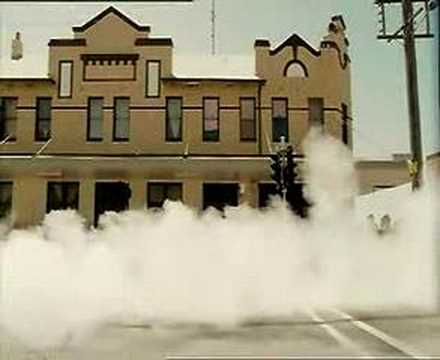 2007
Pinkie ("Speeding. No One Thinks Big of You.")
Gives speeding a humiliating label, the wiggled little finger that means a small penis, so young men drop it to avoid ridicule rather than because of the danger.
-
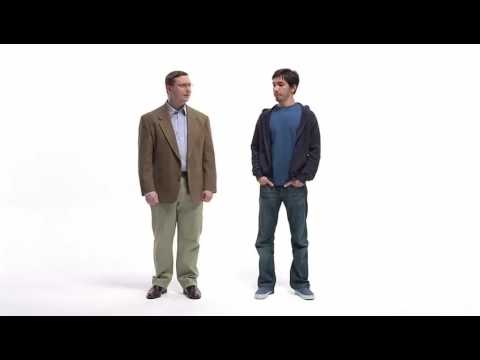 2006
Get a Mac ("Mac vs. PC")
Turns the rival into a character, the endearing but malfunctioning PC, so the very word “PC” comes to stand for crashes, viruses and a lovable loser.
-
 2005
Australia Day Lamb
Brands vegetarians and anyone else who skips lamb “un-Australian”, a label that turns a meal choice on Australia Day into a test of national loyalty.
-
New Labour, New DangerThe Conservative Party (UK)1996
New Labour, New Danger ("Demon Eyes")
Brands the opposition “New Danger”, a label backed by demonic eyes, so voters fear New Labour without weighing its policies.
-
 1989
Girlfriend ("If You Drink, Then Drive, You're a Bloody Idiot")
Its end line calls anyone who drinks and then drives “a bloody idiot”, an insult meant to make the behaviour contemptible rather than merely risky.
-
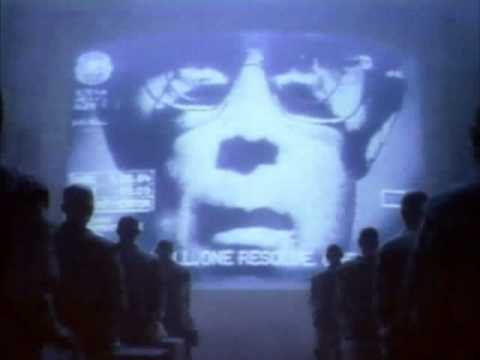 1984
1984
Never names IBM but casts its dominance as Orwell's Big Brother, a label that makes buying from the market leader look like submitting to it.
-
 1943
Don't Take the Squander Bug When You Go Shopping
Covering the bug in swastikas brands frivolous spending as helping Hitler.
-
 1942
He's Coming South
The enemy is reduced to a single giant, menacing figure rather than shown as an army of people.
-
 1918
?
Draws Germany as a blood-soaked ape in a pickelhaube, so the enemy is judged a beast before any argument is made.
-
 1918
Beat Back the Hun with Liberty Bonds
Calls the enemy “the Hun”, the slur Allied propaganda used to cast Germans as barbarians, so buying bonds answers an insult rather than a financial case.
-
 1918
Destroy This Mad Brute – Enlist
Never names Germany but brands it a “mad brute”, drawn as a slavering ape, so enlisting becomes a reply to a monster rather than to an argument about the war.
-
 1918
On ne passe pas! 1914–1918
Calls the enemy 'Boche' and his peace talk 'hypocrisy', ruling out any compromise before it can be discussed.
-
 1918
Remember Belgium – Buy Bonds – Fourth Liberty Loan
The pickelhaube alone marks the attacker as German, so a whole nation is reduced to one brute.
-
 1916
The Blood Vote
Draws the prime minister gloating over the ballot box, so conscription's champion looks like a villain.
Questions people ask
What is name-calling in propaganda?
Name-calling is a propaganda technique that attaches a bad label to a person, group or idea so that the audience rejects it without examining the evidence. The Institute for Propaganda Analysis listed it first among its seven propaganda devices in 1937.
What is an example of name-calling propaganda?
A classic example is the First World War poster Beat back the Hun with Liberty Bonds (1918), which labels German soldiers "the Hun" and shows one with a bloody bayonet. In politics, a 1990 pamphlet from the Republican committee GOPAC urged candidates to describe opponents with words such as "sick", "pathetic" and "traitors".
Is name-calling a logical fallacy?
Yes, when the insult is offered in place of an argument. Logicians treat it as a form of the ad hominem fallacy: an irrelevant attack on a person presented as if it disproved what they say.
What is the difference between name-calling and glittering generalities?
Name-calling uses bad words to make you reject something without evidence; glittering generalities use virtue words such as "freedom" or "progress" to make you accept something without evidence. The Institute for Propaganda Analysis called the glittering generality "Name Calling in reverse".
Why is name-calling effective?
It is quick, memorable and needs no proof. A loaded word triggers feelings the audience already has, and because such words mean different things to different people, each listener fills in their own worst meaning.
Is name-calling used in advertising?
It is most visible in political attack ads and wartime posters, such as the Conservative Party's 1996 "New Labour, New Danger" poster with its demon eyes. Commercial brands more often mock an unnamed rival or make a direct comparison than call a competitor names.
What symbol did the Institute for Propaganda Analysis use for name-calling?
In The Fine Art of Propaganda (1939), the Institute for Propaganda Analysis gave name-calling the symbol of a thumb turned down, an ancient sign of condemnation.
Sources8
- Propaganda Analysis, Volume I (includes “How to Detect Propaganda”, the bulletin’s second issue, 1937)
- The Fine Art of Propaganda (excerpts from the Institute for Propaganda Analysis book, ed. Alfred McClung Lee and Elizabeth Briant Lee, 1939)
- The Iconography of Propaganda Analysis (excerpts from The Fine Art of Propaganda, 1939)
- Beat back the hun with liberty bonds / F. Strothmann
- Der ewige Jude
- The Politics of Slash and Burn
- Gingrich's Plan for Power 10 Years in the Making
- Fallacies